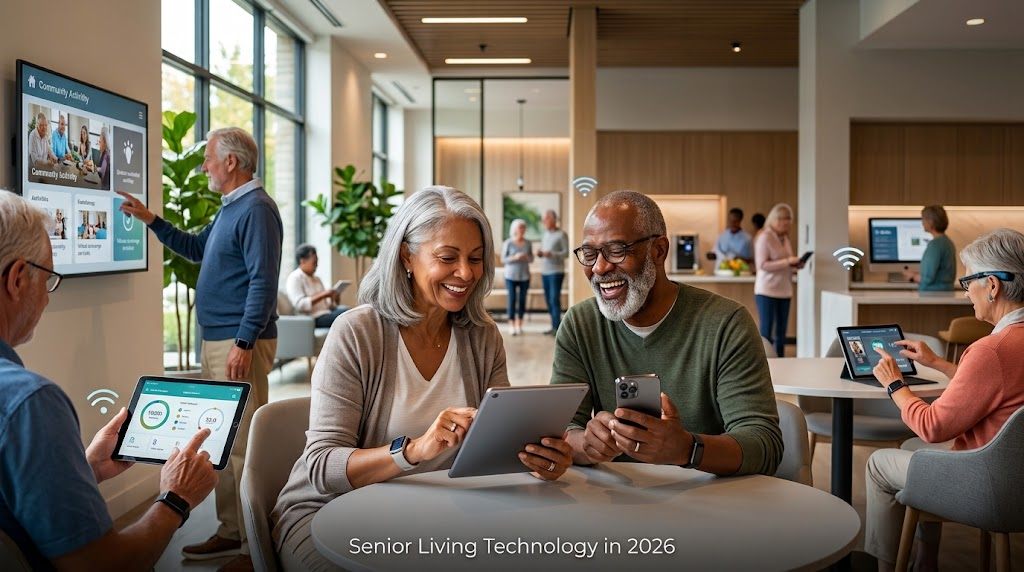
Senior living communities face growing challenges, including staffing shortages, rising operating costs, administrative workloads, and aging infrastructure. At the same time, residents and families expect safe environments, personalized support, and compassionate care.
AI in senior living offers opportunities to manage these demands more efficiently. By supporting routine tasks, analyzing operational data, and helping teams plan resources, AI can improve day-to-day operations without replacing the human relationships that make senior care meaningful.
As interest in artificial intelligence grows, senior living communities are exploring ways to. As communities explore new approaches to operational efficiency, the right senior living technology solutions can help provide the connectivity and technology infrastructure needed to support their evolving needs.
How AI Streamlines Senior Living Operations
Artificial intelligence can support everyday tasks such as staff scheduling, facility maintenance, and inventory management. These applications help senior living operators organize resources, identify potential problems, and make more informed decisions.
Modern senior living AI technology can help communities manage routine operational tasks more efficiently. However, the benefits depend on selecting appropriate tools and integrating them into existing workflows.
Smart Workforce Management and Scheduling
Staff scheduling can become complicated when communities face unexpected absences, changing resident needs, and overtime pressures. AI-assisted scheduling tools can analyze staff availability and staffing patterns to help managers identify coverage gaps.
These systems may also help employees manage shift preferences and requests through digital platforms. Human managers must still consider resident needs, staffing requirements, and employee well-being when making final decisions.
Predictive Facility Maintenance
Unexpected HVAC failures, plumbing problems, and elevator breakdowns can disrupt daily operations and increase repair costs. Predictive maintenance tools can analyze equipment data and, where available, sensor readings to identify potential faults.
Early warnings allow maintenance teams to investigate problems before they cause significant disruptions. Results depend on the equipment, available data, and the capabilities of the system, but predictive maintenance can support more proactive facility management.
When evaluating AI for assisted living, communities should consider staff workflows, resident privacy, system reliability, and the need for human oversight.
Food Service and Inventory Optimization
Senior living dining teams must balance food budgets, resident preferences, allergies, and individual dietary requirements. AI-assisted forecasting tools can analyze previous meal attendance and purchasing patterns to help estimate inventory needs.
Digital systems may also flag potential conflicts between meal selections and documented dietary restrictions when appropriate integrations are available. Staff must verify these alerts and ensure that meals comply with residents’ care plans and dietary requirements.
The Operational Impact of AI in Senior Living
AI can help communities move from reactive problem-solving toward more informed operational planning. By analyzing relevant data, senior living AI technology can support resource allocation and help managers identify recurring issues.
| Operational area | Traditional approach | AI-supported approach |
| Staffing | Manual scheduling and adjustments | Suggested schedules and coverage alerts |
| Maintenance | Repairs after problems occur | Data-supported maintenance alerts |
| Inventory | Manual tracking and estimated orders | Demand forecasting and digital monitoring |
| Administration | Repetitive paperwork | Automated documentation support |
| Management | Information across separate records | Consolidated operational insights |
These applications can help managers identify inefficiencies, reduce repetitive administrative work, and improve visibility across facilities. Actual results depend on software capabilities, data quality, staff adoption, and implementation costs.
Communities evaluating senior living technology solutions should also consider whether their existing technology infrastructure can support reliable connectivity and compatible systems.

Why AI Will Not Replace Caregivers in Senior Living
A major concern surrounding AI adoption is the possibility of losing the human connection that defines quality senior care. Residents need empathy, reassurance, personal attention, and support that responds to their individual circumstances.
AI for senior care should support caregivers, not replace them. Technology can help organize information and automate selected administrative tasks, but human judgment, emotional understanding, and personal relationships remain essential to quality care.
When implemented effectively, AI-supported workflows may help staff spend less time on repetitive paperwork and more time engaging with residents. However, these benefits depend on how well the technology fits existing care routines.
- Meaningful connections: More efficient administration can create opportunities for conversations and activities.
- Attentive support: Caregivers can focus on residents’ needs and preferences.
- Staff support: Better-organized workflows may help reduce certain administrative pressures.
- Personalized experiences: Reliable resident information can support more consistent care when used appropriately.
The goal is not to automate every aspect of senior care. It is to use suitable technology to support staff while preserving the personal attention residents deserve.
Key Risks of AI in Senior Living
AI adoption requires careful planning because technology can introduce privacy, security, reliability, and operational challenges. Communities should assess these risks before implementing new tools.
Data Security and Privacy
AI systems may process sensitive resident or employee information. Communities should assess data-handling practices, access controls, encryption, vendor security, and applicable privacy requirements before adopting new tools.
They should also understand how information is stored, who can access it, and whether data is shared with third parties.
Over-Reliance on Automation
AI recommendations can be inaccurate or based on incomplete information. Staff should verify important outputs, particularly those affecting resident care, dietary requirements, staffing, and safety.
AI should inform decisions rather than automatically replace professional judgment or established safety procedures.
Staff Training and Adoption
New software can create additional work if employees do not understand how to use it. Practical training, staff feedback, and clear procedures can help communities integrate technology into existing workflows.
Involving employees early can also help managers identify practical concerns before introducing a new system across the community.
System Reliability
Connected applications depend on functioning networks, devices, and software integrations. Facilities should assess connectivity requirements and establish appropriate backup procedures for essential operations.
Technology planning should account for interruptions so staff can continue following established procedures when a system becomes unavailable.

What Technology Infrastructure Is Needed to Support AI in Senior Living?
AI software is only one part of a connected technology environment. Depending on the application, communities may need reliable commercial Wi-Fi, suitable network equipment, structured cabling, compatible devices, and secure software integrations.
The infrastructure requirements vary by system. Before investing in new tools, communities should assess their current network capacity, security practices, device compatibility, and support arrangements.
CSS helps senior living communities with commercial technology infrastructure and communications solutions that support their day-to-day technology needs.
Reliable Commercial Wi-Fi
Staff applications, connected devices, and digital management systems depend on appropriate network coverage and capacity. Poor connectivity can disrupt workflows and limit access to information.
CSS provides reliable WiFi for senior living to support connectivity across residential areas, dining spaces, common rooms, and staff work areas.
Communities considering additional connected applications should evaluate network coverage, capacity, and reliability before deployment.
Connected Nurse Call Systems
Nurse call systems are an important part of resident safety and caregiver communication. Depending on system capabilities and configuration, compatible systems can help route alerts to the appropriate personnel and support communication between residents and care teams.
CSS offers nurse call systems for senior living to support communication needs in senior care environments. Communities should also consider system reliability, staff response procedures, and contingency planning.
Any integration with other digital tools should be assessed for compatibility and tested before it becomes part of daily operations.
Structured Cabling and Network Infrastructure
Structured cabling and appropriate network equipment provide the physical foundation for connected systems. Proper planning helps communities accommodate current requirements and prepare for future technology upgrades.
Facilities should evaluate network capacity, compatibility, security, and expansion needs before introducing additional connected applications. A well-planned infrastructure can also make future upgrades easier to manage.
Technology for Assisted Living Facilities
Assisted living communities have specific operational and communication requirements. Selecting appropriate technology means considering resident needs, staff workflows, building layouts, and the systems already in use.
Explore technology for assisted living facilities to learn more about CSS’s technology offerings for assisted living environments.
Upgrade Your Community’s Technology Infrastructure
AI can help senior living communities manage selected tasks more efficiently, but dependable infrastructure is important for connected applications and communication systems to operate reliably.
CSS provides commercial technology solutions for senior living environments, including Wi-Fi, nurse call systems, managed IT, and communications capabilities. Communities can assess their current infrastructure, identify areas for improvement, and plan upgrades around their operational needs.
Ready to strengthen your community’s technology foundation? Talk to CSS to discuss your senior living technology requirements.
Frequently Asked Questions
How is AI being used in senior living communities?
AI can support staff scheduling, predictive maintenance, inventory forecasting, administrative documentation, and operational reporting. These applications help teams organize resources and identify potential issues while keeping staff responsible for important decisions.
Can AI improve senior living operations?
AI can support operational efficiency by identifying scheduling conflicts, helping forecast inventory needs, and assisting with maintenance planning. Results depend on data quality, suitable software, and effective implementation.
Will AI replace caregivers in senior living?
AI can support caregivers by automating selected administrative tasks, but it cannot replace the empathy, human judgment, personal relationships, and hands-on assistance essential to quality senior care.
What are the risks of AI in senior living?
Key risks include privacy concerns, cybersecurity vulnerabilities, inaccurate recommendations, insufficient staff training, and over-reliance on automation. Communities should establish safeguards, train employees, and retain human oversight.
What technology infrastructure is needed to support AI in senior living?
Requirements depend on the application but may include reliable commercial Wi-Fi, appropriate network equipment, structured cabling, compatible devices, and secure integrations. Facilities should also plan for system interruptions and essential communication needs.
Can AI help senior living communities reduce operating costs?
AI-assisted scheduling, inventory forecasting, and predictive maintenance can help managers identify inefficiencies. However, cost savings are not guaranteed and depend on implementation costs, system performance, and how effectively staff use the technology.